Guided tour · One artist · Helsinki · Hyvinkää · 1862–1946
Helene Schjerfbeck
From a soldier in the snow to a face of a few strokes: ten works, in the order she made them.
Start this tour in AuriaanOpens the interactive flight at this tour, with a guide's voice. It needs a modern browser; the same works are shown below.
- Works
- 10
- Time
- about 15 min
- Collections
- 1
About this tour
Helene Schjerfbeck was born in Helsinki in 1862 and painted for more than sixty years. All ten works here belong to the Finnish National Gallery's Ateneum Art Museum. In the order she made them, they lead from history painting to faces of a few strokes. At every work, look first, then discover.
We begin in Finland in 1880. Schjerfbeck is still a teenager.
The 10 works
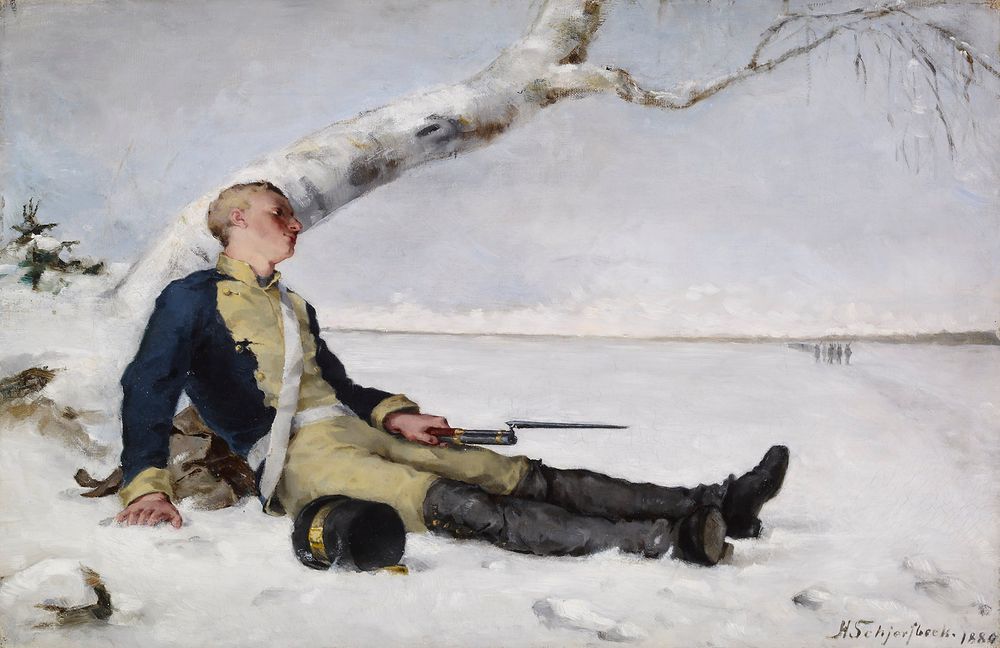
Finnish National Gallery, Ateneum Art Museum · CC0 · A I 221 · View at the museum
Licence: CC0Wounded Warrior in the Snow
He lies alone in the snow. Or is he alone?
Far off on the snow stand a few tiny figures. He lies alone in the foreground.
The scene is set in the war of 1808–09 between Sweden and Russia, which was fought in Finland.
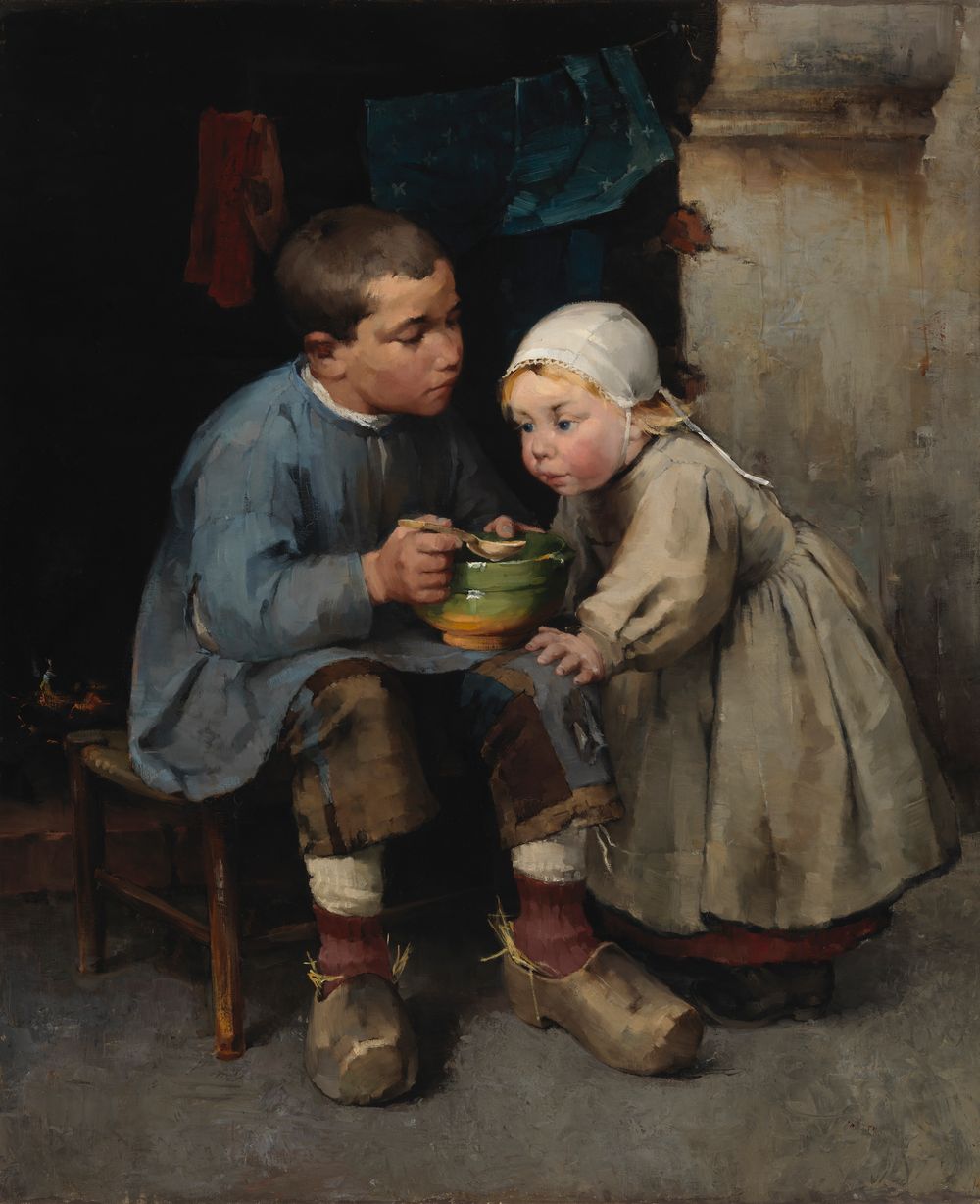
Finnish National Gallery, Ateneum Art Museum · CC0 · A I 222 · View at the museum
Licence: CC0A Boy Feeding his Little Sister
Who is watching the spoon most closely?
His little sister: eyes fixed on it, lips already parted.
The faces are painted with care, the wall and the clothes with broad, quick strokes. Schjerfbeck was not yet twenty.
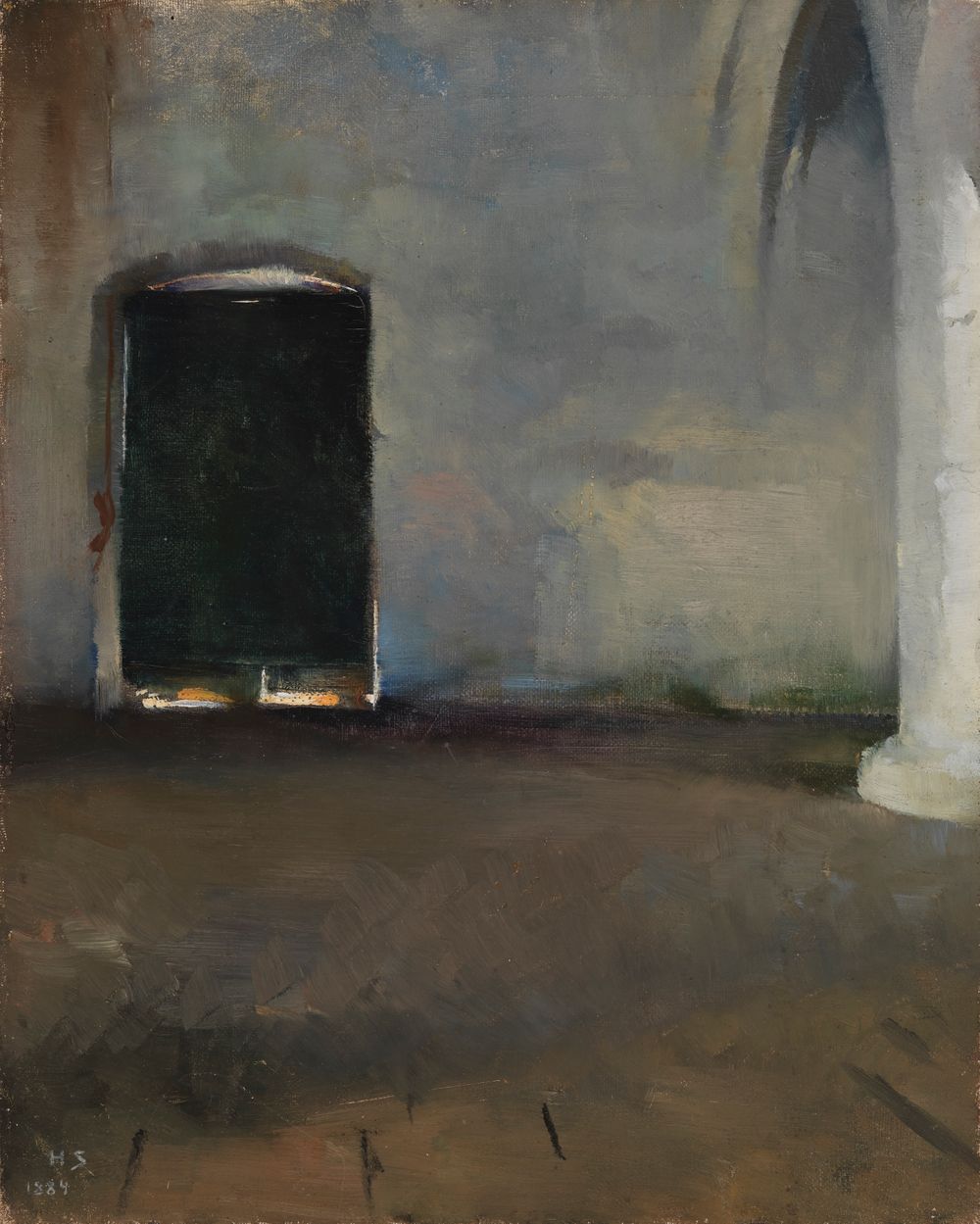
Finnish National Gallery, Ateneum Art Museum · CC0 · A IV 3680 · View at the museum
Licence: CC0The Door
A dark door in a bare wall. What gets through it?
Light: a thin glowing strip along the threshold, from the other side.
She painted it in the chapel of Trémalo, near Pont-Aven. Just a wall, a door and a line of light: very bare for 1884.
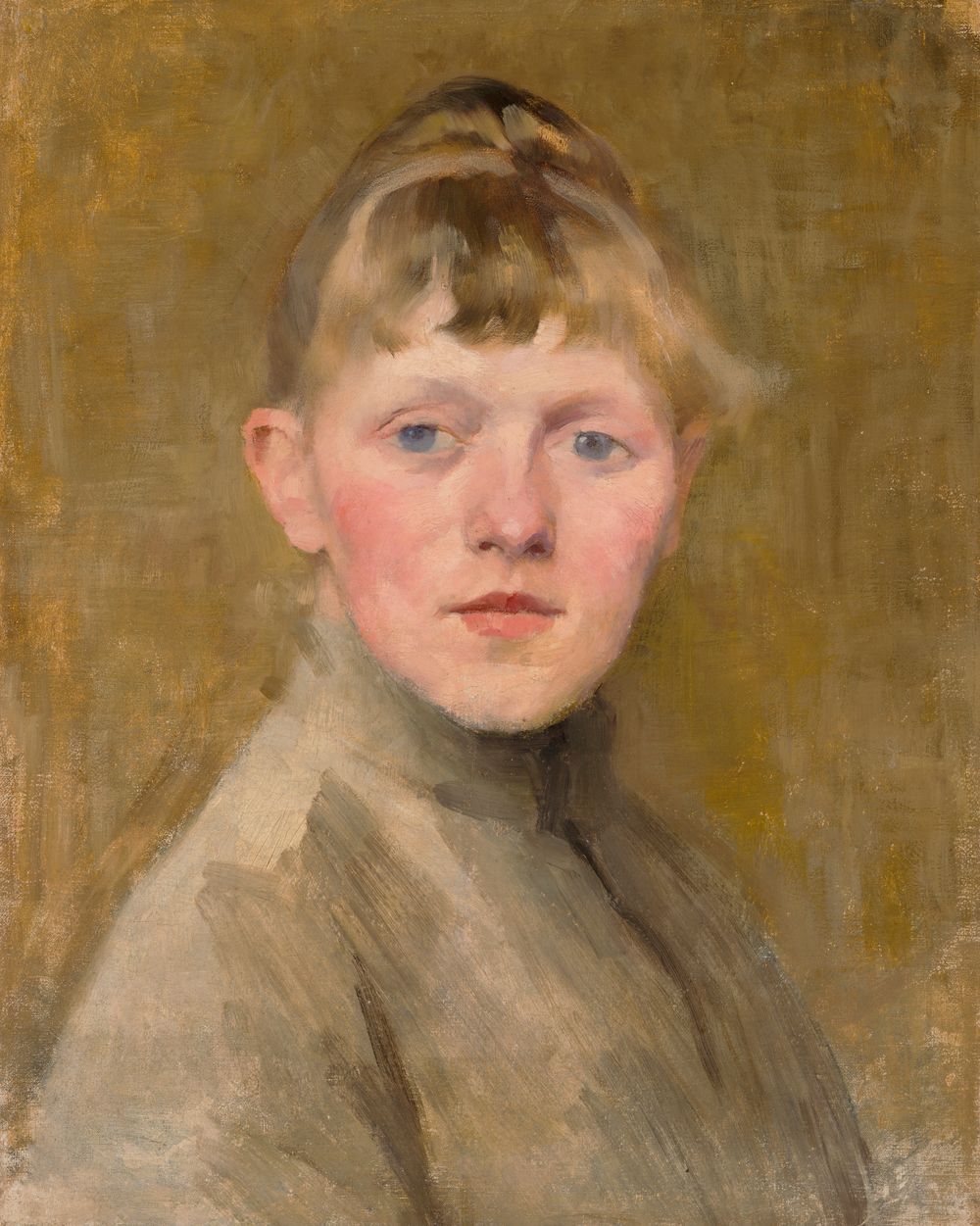
Finnish National Gallery, Ateneum Art Museum · CC0 · A-1991-97 · View at the museum
Licence: CC0Self-Portrait
She looks straight at us. How does she show herself: flattering, or frank?
Frankly: flushed cheeks, a firm mouth and a steady, searching stare. No jewels, no pose.
She was in her early twenties. For the next sixty years she painted her own face again and again. We will meet it three more times.

Finnish National Gallery, Ateneum Art Museum · CC0 · A I 223 · View at the museum
Licence: CC0The Convalescent
What is the child looking at so closely?
A twig with its first small leaves. Like the child, it is coming back to life.
Painted in St Ives. Shown at the Paris Salon as 'First Greening', it won a bronze medal at the World's Fair of 1889.

Finnish National Gallery, Ateneum Art Museum · CC0 · A IV 2994 · View at the museum
Licence: CC0The Seamstress (The Working Woman)
How many colours did she use here?
Very few: black, a rusty red, soft grey and one touch of yellow on the chair.
Her style had become simple and flat. The woman sits at rest in a rocking chair, in profile, her hands folded in her lap.
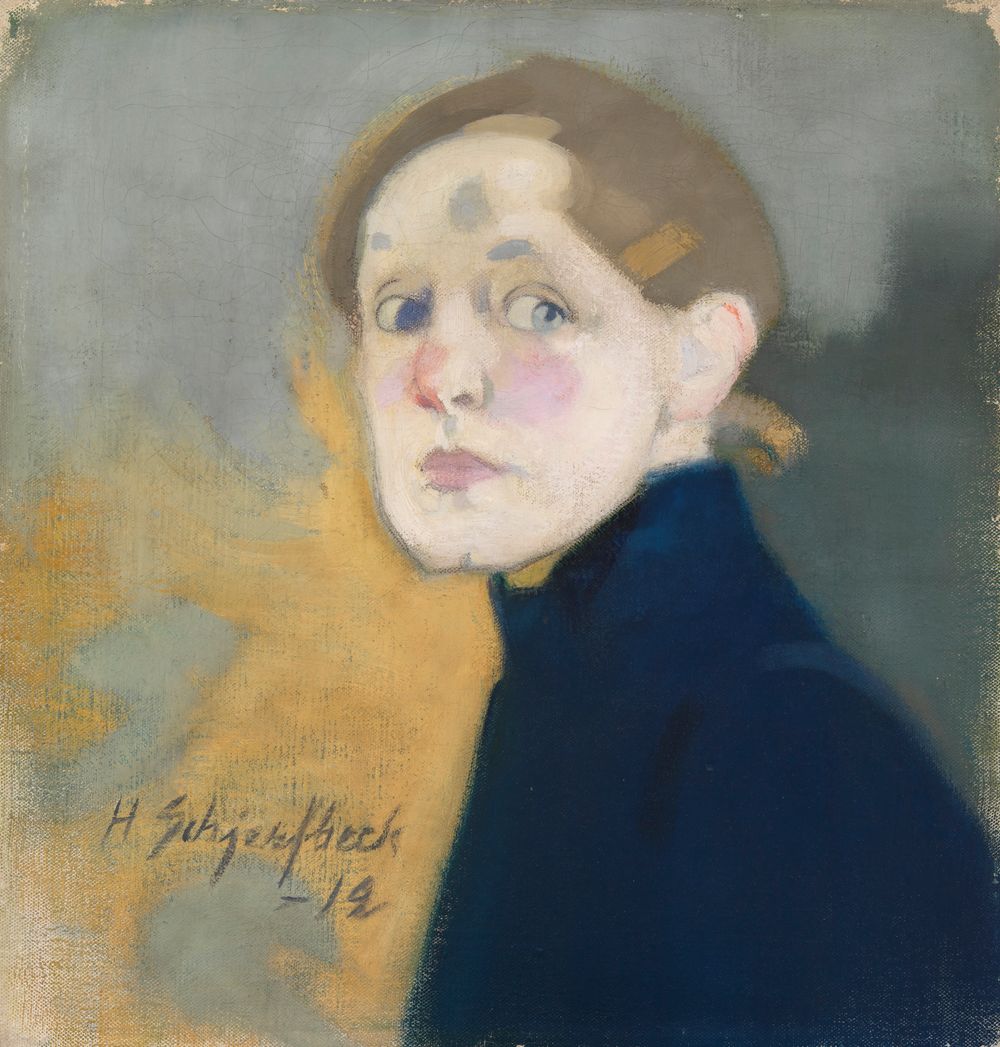
Finnish National Gallery, Ateneum Art Museum · CC0 · A-2016-51 · View at the museum
Licence: CC0Self-Portrait
Compare this face with her self-portrait of 1884–85. What has changed?
Everything is simpler: a pale mask, dark outlines, and patches of pink and violet on the cheeks.
She was living quietly in Hyvinkää. For more than ten years she did not even visit Helsinki.
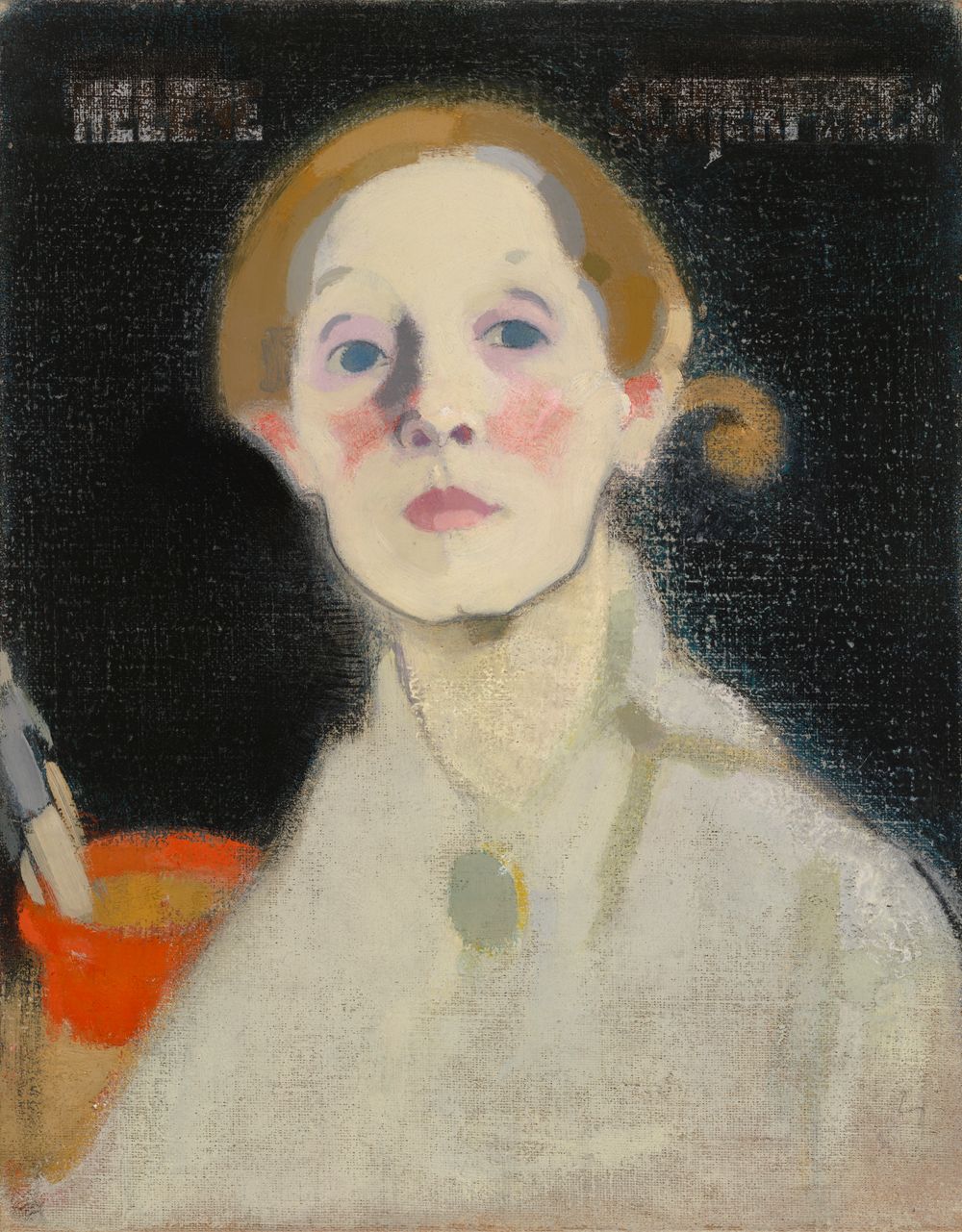
Finnish National Gallery, Ateneum Art Museum · CC0 · A II 1065 · View at the museum
Licence: CC0Self-Portrait, Black Background
Something is written above her head. What?
Her name, HELENE SCHJERFBECK: carefully lettered, then rubbed back until it is hard to read.
The Finnish Art Society asked her for a self-portrait for its collection. She was in her early fifties.
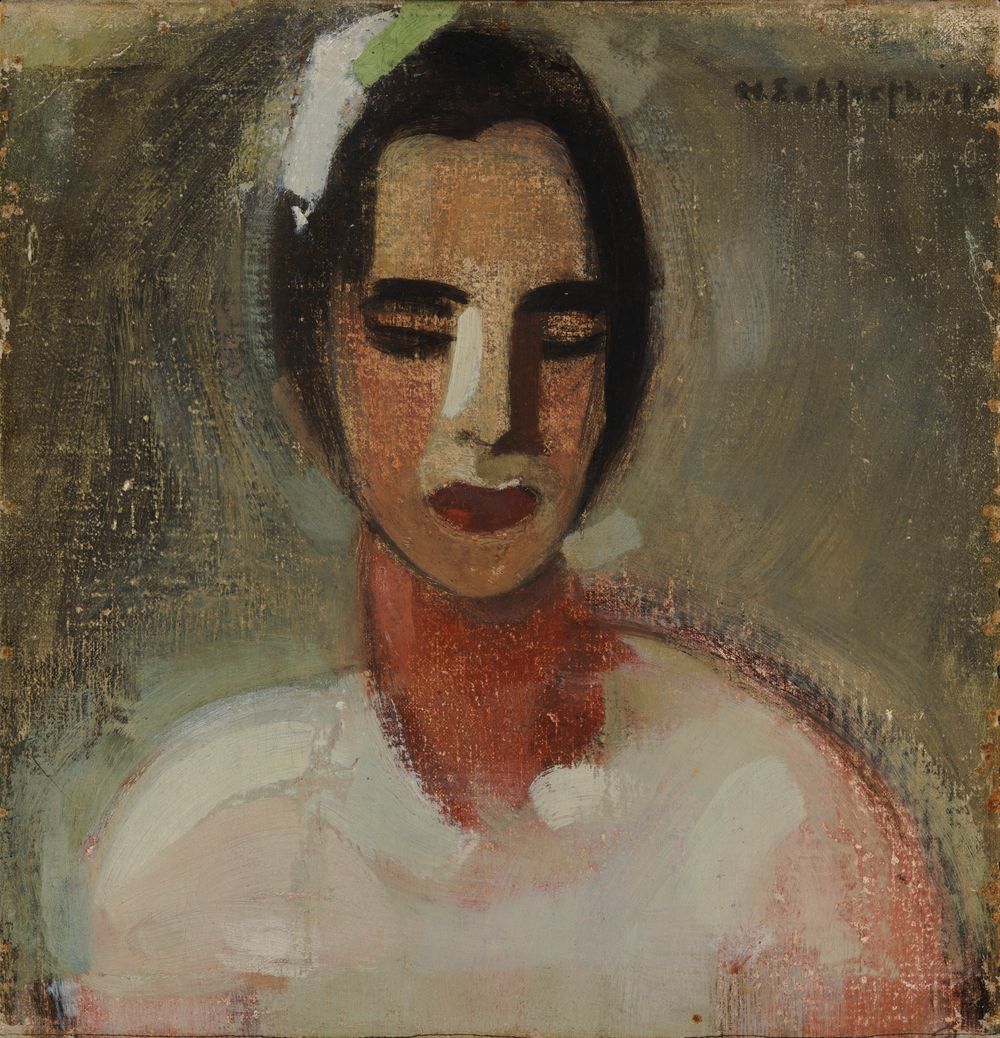
Finnish National Gallery, Ateneum Art Museum · CC0 · A-2005-107 · View at the museum
Licence: CC0Girl from California I
Look closely at her face. What shows through the paint?
The weave of the canvas. Schjerfbeck rubbed and scraped her paint, leaving it thin and worn.
Her faces were becoming masks: dark brows, a light stripe down the nose, a red mouth.
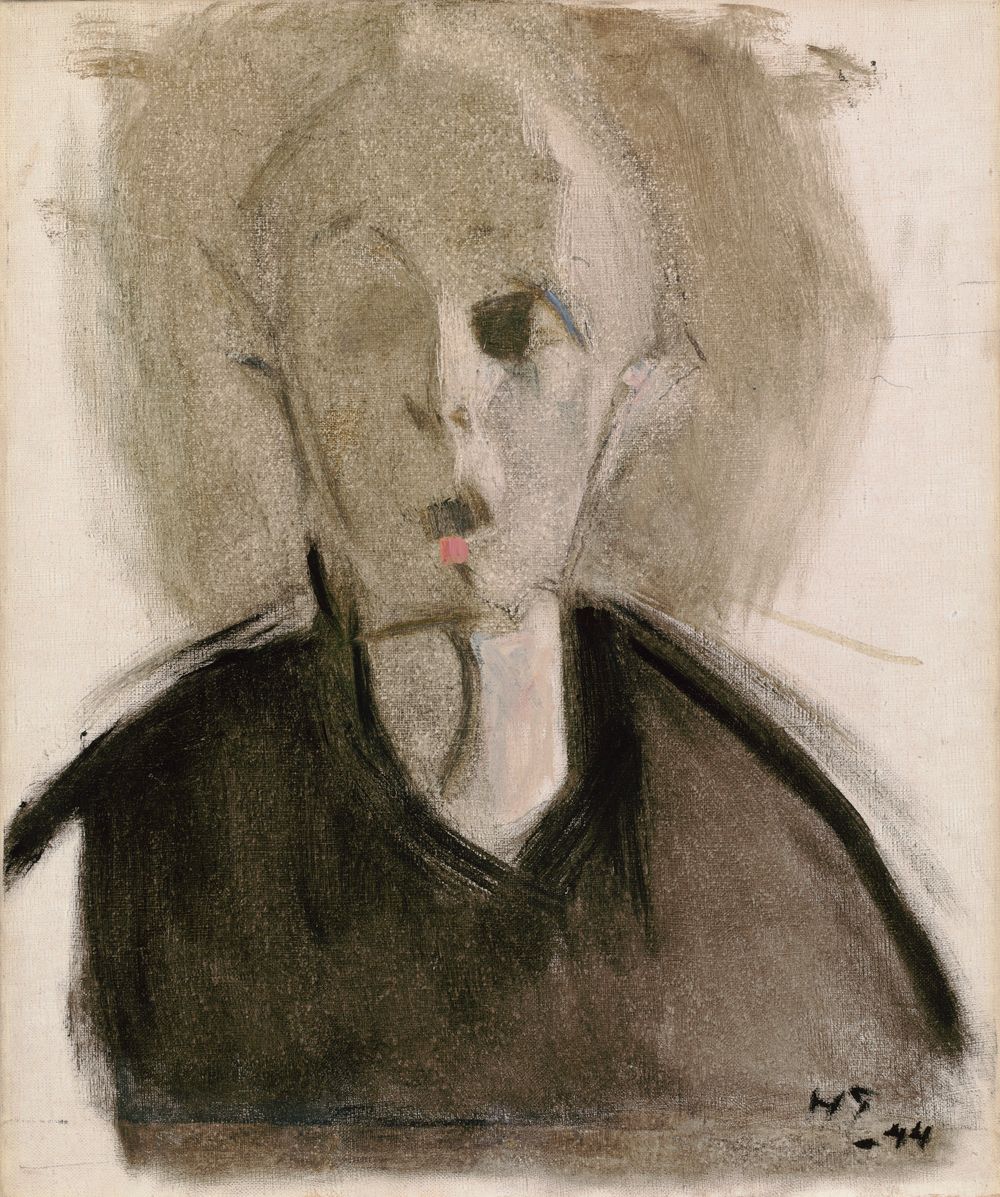
Finnish National Gallery, Ateneum Art Museum · CC0 · A IV 3744 · View at the museum
Licence: CC0Self-Portrait with Red Spot
Find the only spot of colour in this face.
A small red mark at her mouth. The rest is grey, black and bare canvas.
She was in her eighties. In these last self-portraits, her face is reduced to a few marks.
The end of the tour
Sixty years of looking.
From careful history painting to a face of a few marks on bare canvas. Schjerfbeck died at Saltsjöbaden in Sweden in January 1946, aged 83.
Questions at the end
Where did Schjerfbeck paint The Convalescent?
- St Ives, in Cornwall (correct)
- Paris
- Hyvinkää
She painted it in St Ives in 1888. It won a bronze medal at the Paris World's Fair of 1889.
What did she write across the top of Self-Portrait, Black Background?
- Her own name (correct)
- The date
- A line of poetry
HELENE SCHJERFBECK, carefully lettered and then rubbed back.
What did Schjerfbeck often do to the paint on her canvases?
- Rub and scrape it back (correct)
- Mix sand into it
- Cover it with thick varnish
She rubbed and scraped her paint, so that the weave of the canvas shows through.
Works from these collections
More tours
- Artists of Switzerland in the world's museumsTen artists born or at home in Switzerland, from Liotard to Klee, in nine museums around the world.
- Animal huntEight animals are hiding in works of art from all over the world. Can you find them?
- 1,800 years of facesTen portraits, from Roman Egypt to Van Gogh. Look for the clues: who, when, and why?
- The world around 1600What were artists making around 1600? A journey westward from Japan to Spain, in ten works, most of them made within about ten years of that date.
- Blue and whiteHow cobalt blue on white travelled from China to Turkey, Holland, Japan, Mexico, Korea and England: ten pieces, roughly in the order they were made.
- The moonA god, a hare, a bodhisattva, a crescent, a castle, a jar, geese, photographs, the sea and a city by night: the moon in ten works from around the world.
- The seaWaves, a storm, a calm, a harbour and a sunrise: eight ways of looking at the sea, across 3,000 years.
- A walk through the seasonsA calm walk from spring to winter, in eight works. Large text, a gentle voice and no hurry.
- Look closerSeven famous works, each with a small detail most people miss. Find it yourself, then hear its story.
- How old is it?Eight works from four museums. Guess when each was made before you hear the story: some are far older than they look, and two are younger.
- Albrecht DürerEleven works by the painter and printmaker from Nuremberg: a self-portrait, a rhinoceros and a magic square.
- Rembrandt, in the mirrorTen self-portraits, painted, etched and drawn: from the curly-haired young man to the old master.
- VermeerThirteen of his rare paintings, in the order he made them: quiet rooms, letters and light.
- Giovanni Battista PiranesiRome, real and imagined, in the order he etched it: ruins, squares, prisons, temples and a fireplace.
- J. M. W. TurnerStorms, fire, moonlight and golden haze, in order of date: from a Welsh castle to a storm at sea.
- Hokusai & HiroshigeThe two masters of the Japanese landscape print, side by side: ten prints, in roughly the order they were made.
- Claude MonetEleven paintings in the order he made them: the sea, Camille, grainstacks, a cathedral, London fog and his pond.
- Mary CassattFrom Seville to Paris: a theatre box, a letter, an omnibus and a boat trip. Ten paintings, prints and a pastel, in the order she made them.
- Van GoghTen years of work, from the grey Dutch coast to the colours of the south: eleven works, in the order he made them.
- Vilhelm HammershøiGrey rooms, white doors, light on the floor and a woman seen from behind: ten works, roughly in the order he made them.
Back to the start page · all tours · press